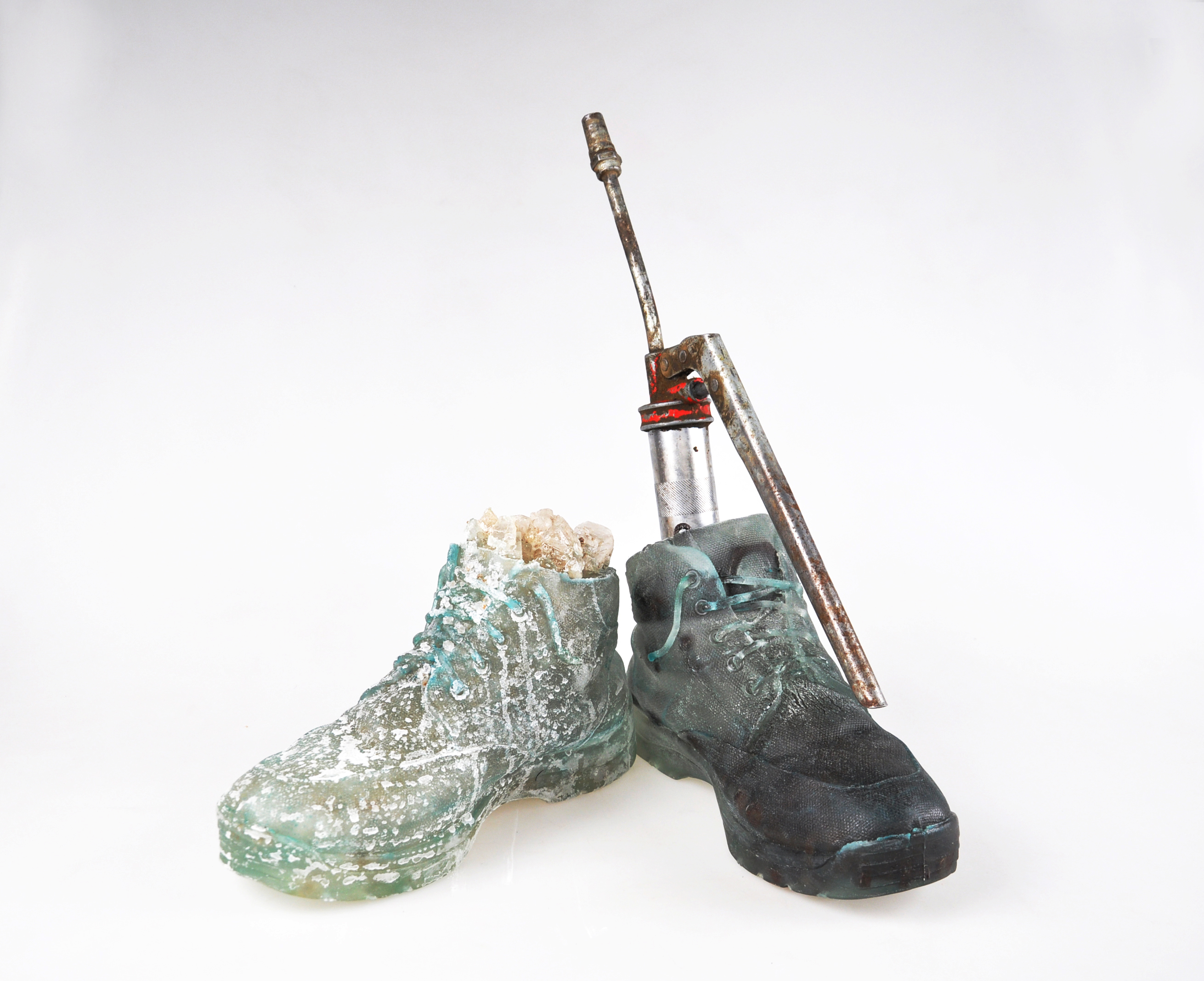
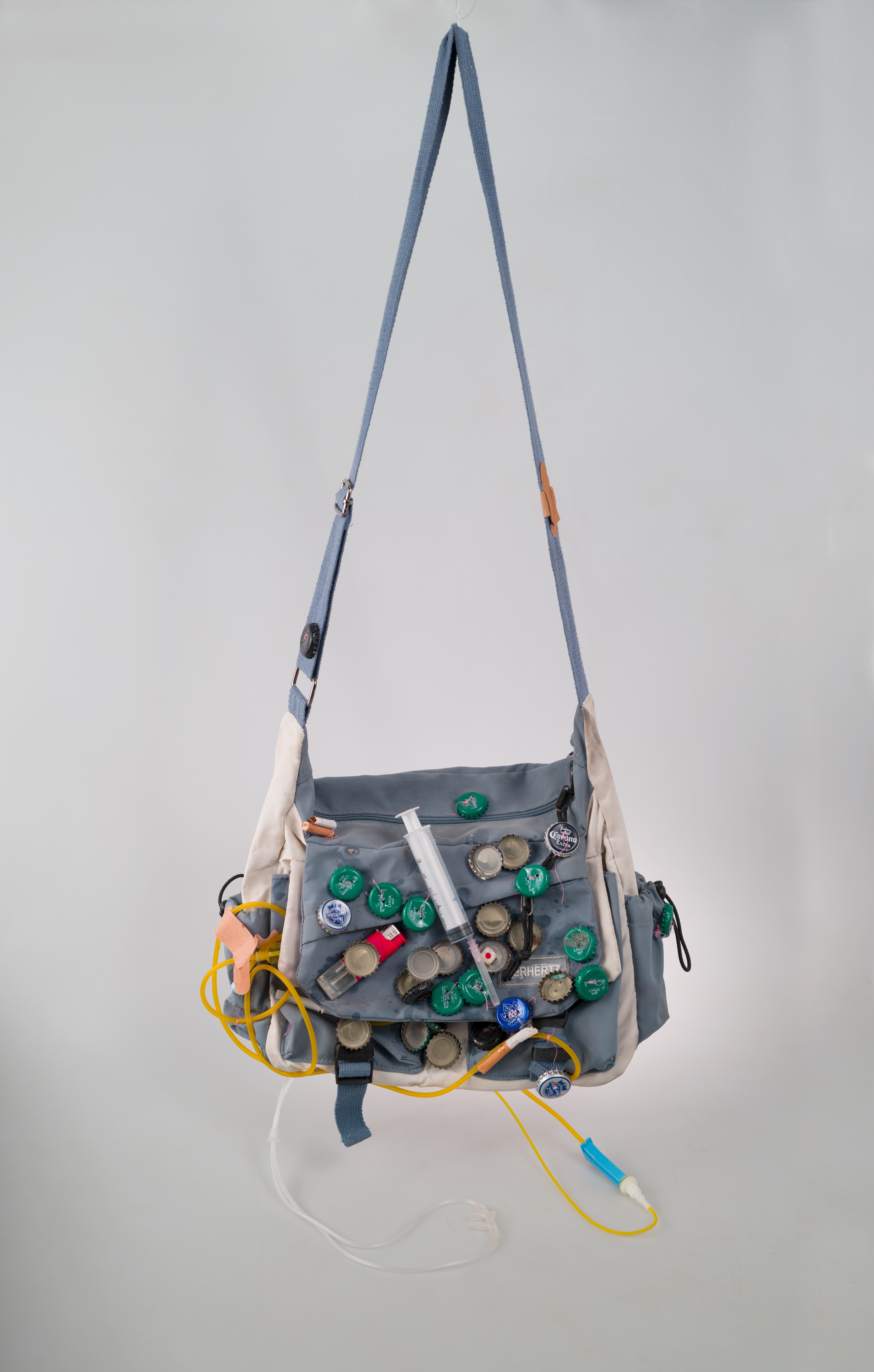
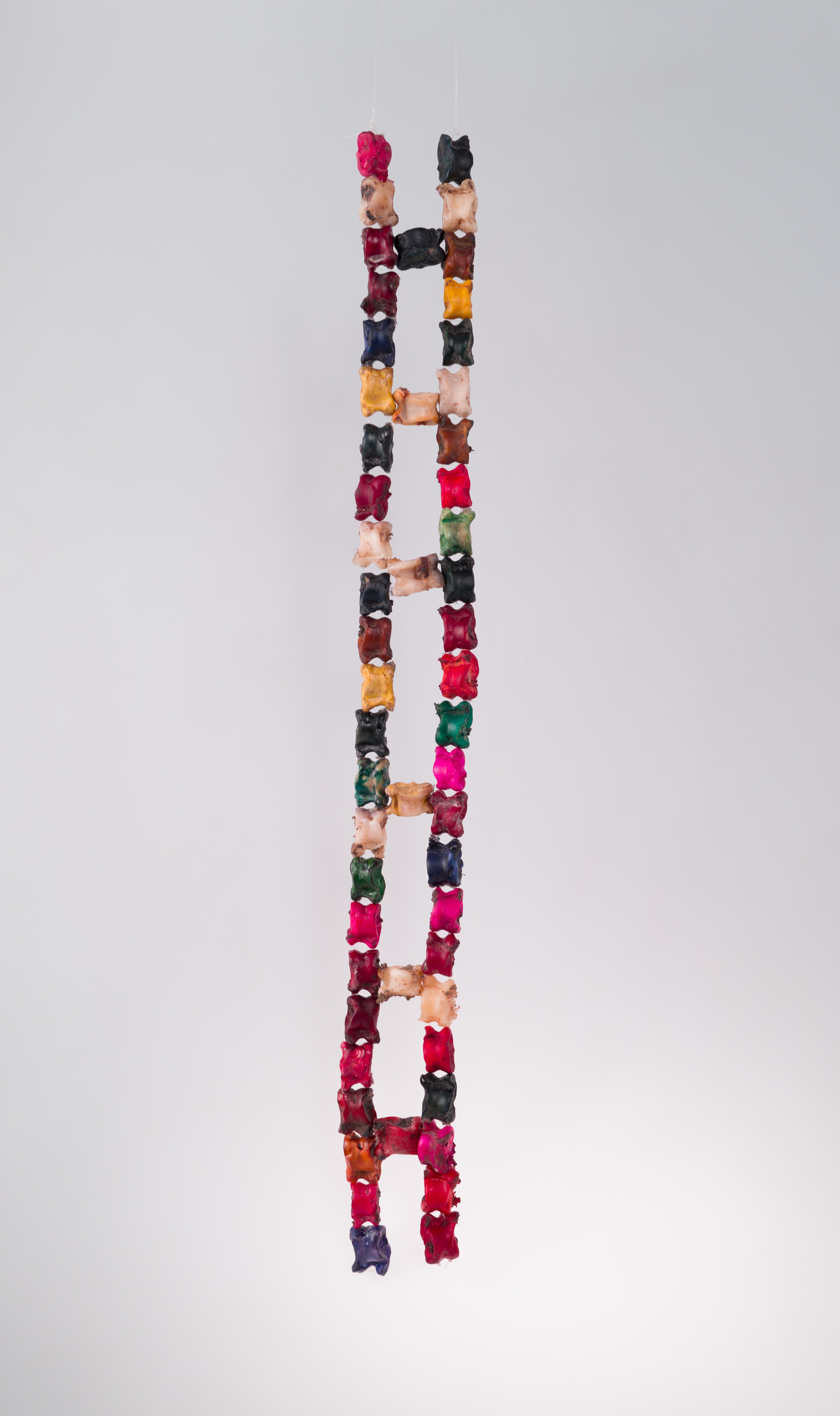
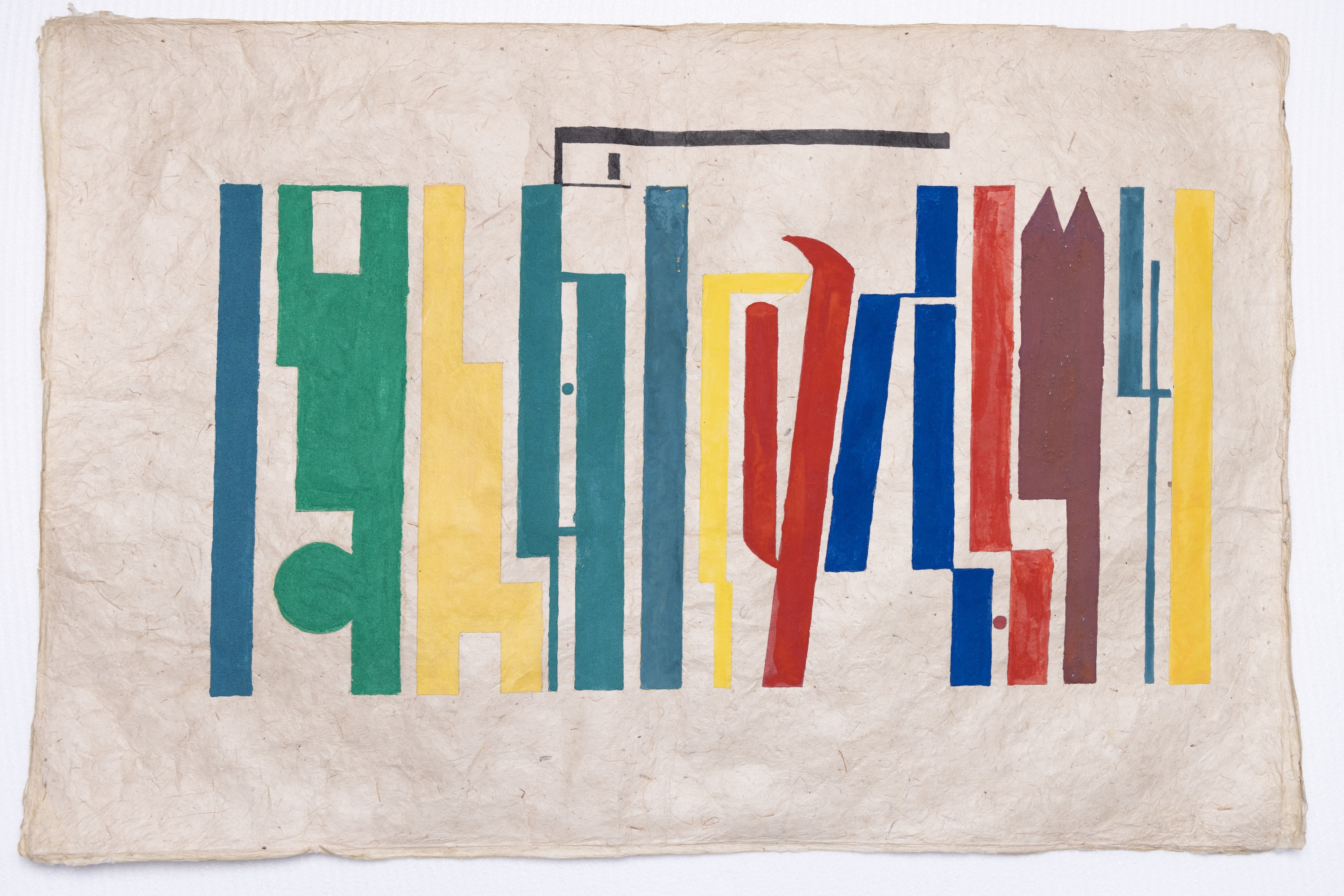
Rossi & Rossi is pleased to present A Strange Song Amongst the Snow, a group exhibition featuring thirteen young Tibetan artists who are shaping the next generation of artistic production in their homeland through their diverse practices. Bringing together paintings, textiles and experimental mixed-media works, the presentation considers family, identity and ecology through the intimate textures of memory and change.
The previous generation of contemporary Tibetan artists, such as Nortse (b. 1963) and Gade (b. 1971), gained recognition through work that responded directly to the rapid social and environmental transformations reshaping life in Lhasa and across Tibet. Many of these artists drew on their immediate surroundings, referencing and reinterpreting classical motifs and styles against the realities of a culture facing modernisation and globalisation. A Strange Song Among the Snow extends this history, presenting contemporary Tibetan art as a continuous discussion across generations. Whilst these artists have grown up in a shifting Tibet, their work continues to explore enduring concerns through the fabric of everyday life. Much of their work is experimental and not overtly framed in classical Tibetan iconography, yet it remains rooted in Tibetan material and visual culture, expressed through natural and intimate materials that are meaningful to today’s emerging artists.
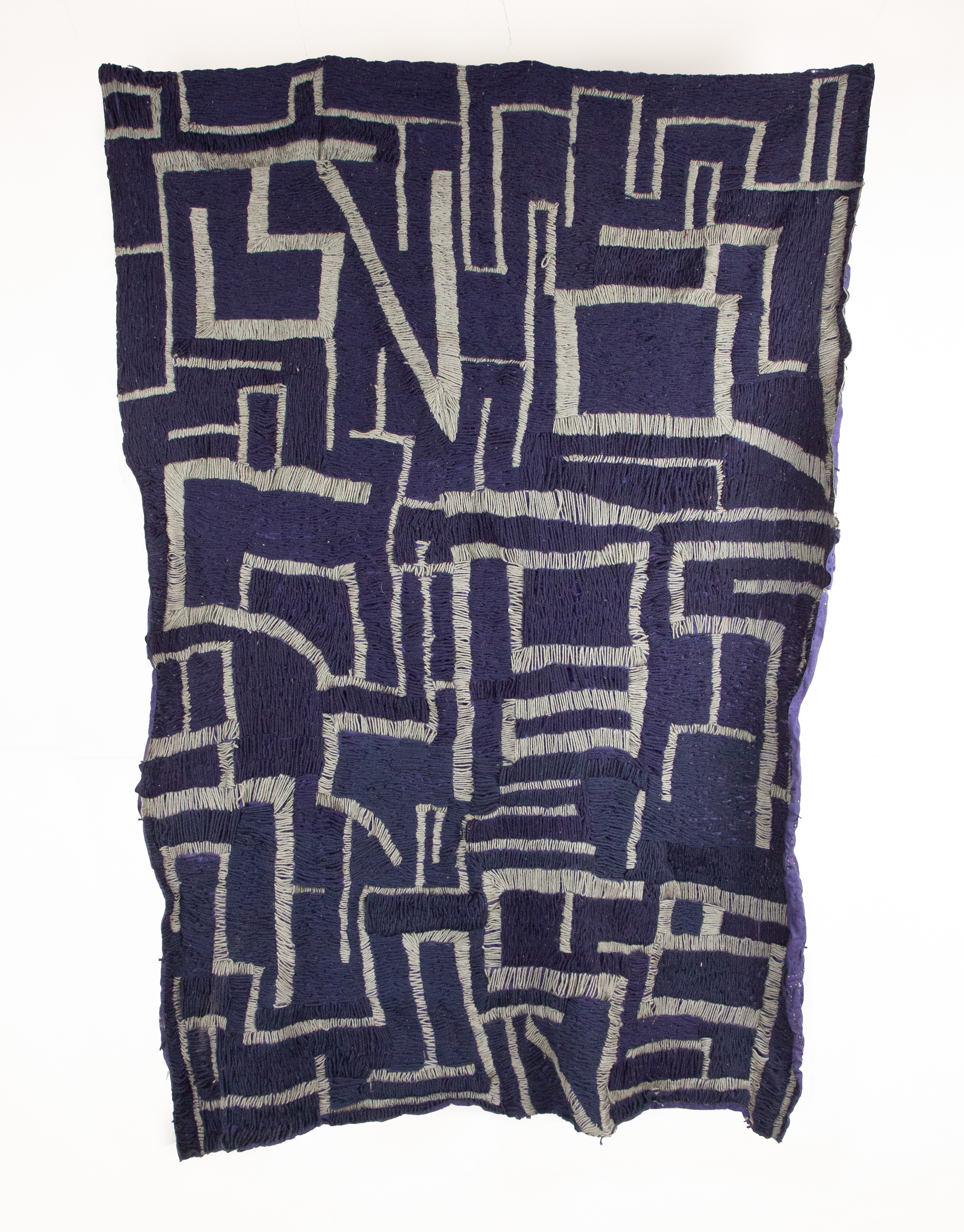
Tsering Samdrup (b. 1991) blends innovative artistic experimentation with cultural tradition. Specifically, the artist utilises photography and installation to reflect on the symbiotic relationship between people, animals, materials, labour and nature in the daily lives of people living in agricultural areas of Tibet. In the present exhibition, he displays a yak wool garment, its form shaped by his mother’s hair, which is braided and asymmetrically woven into the textile, and then adorned with the umbilical cords of Tsering Samdrup and his siblings. This work, Untitled (2023), reconstructs the artist’s regional experience both physically and conceptually through the garment’s abstract shape and materiality. These aspects, he notes, evoke family and environment, calling into question the relationship between the objects themselves and the ideas involved in the process.
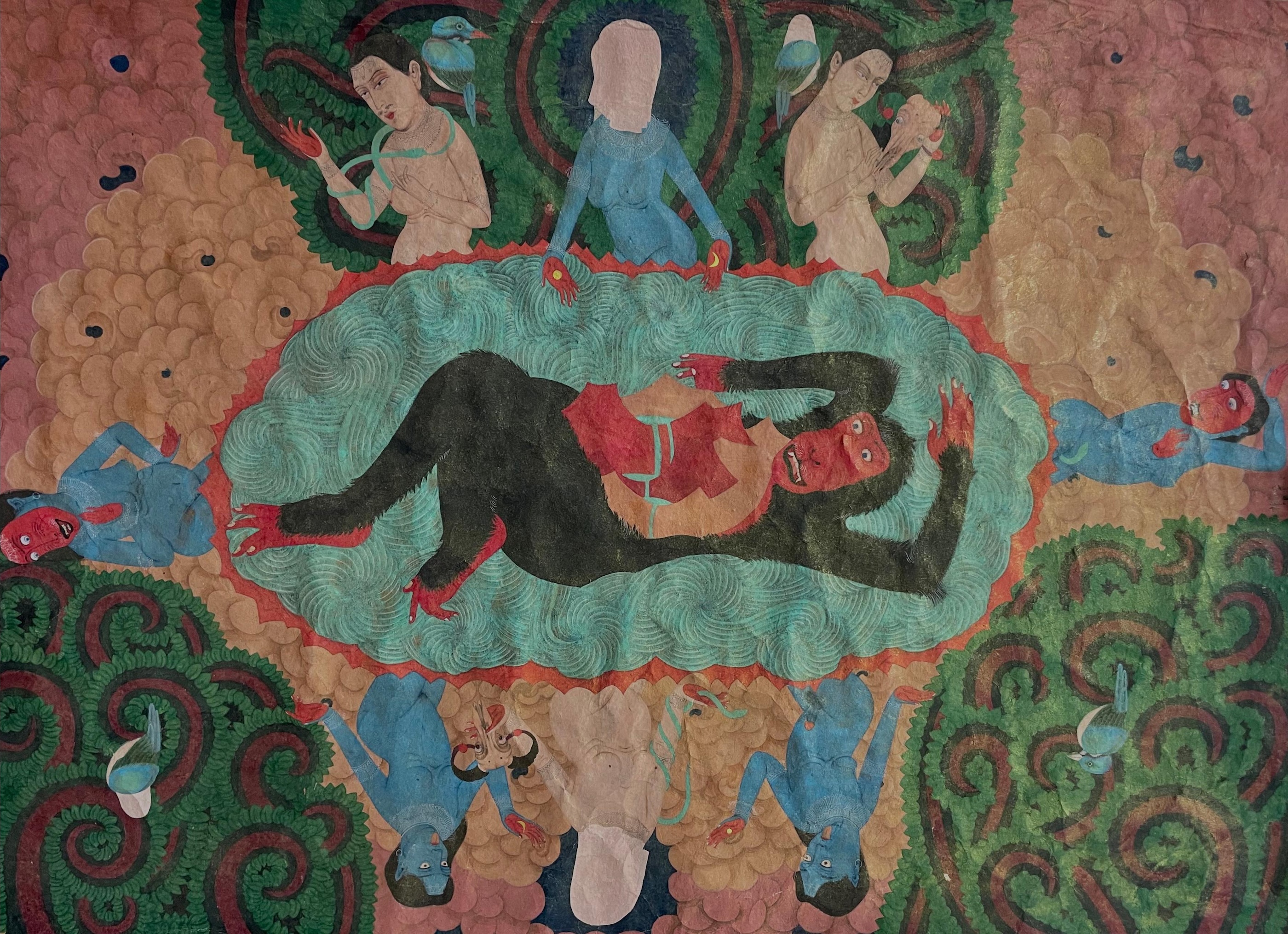
Painting with acrylic and mineral pigments on Tibetan paper, Tenzin Dhame (b. 1997) takes a different approach than Samdrup, drawing instead on classical visual techniques to explore Tibetan mythology. In The Rock Ogress and the Monkey (2022), Dhame not only references the origin myth of Tibet, but also investigates contemporary consciousness and civilisation. Legend has it that the monkey, a reincarnation of the bodhisattva symbolising compassion, married an ogress made of rock who had threatened to fill the land with evil if the monkey refused the proposal. They had six children who later became the six principal clans of Tibet. With this myth as a point of departure, the artist re-interprets the mythical figures of the mother goddess, the father figure, desire and order. He uses these examples to discuss how the individual emerges from and transcends chaos and primitive instincts to reach a state of self‑awareness through forming a relationship with the world.
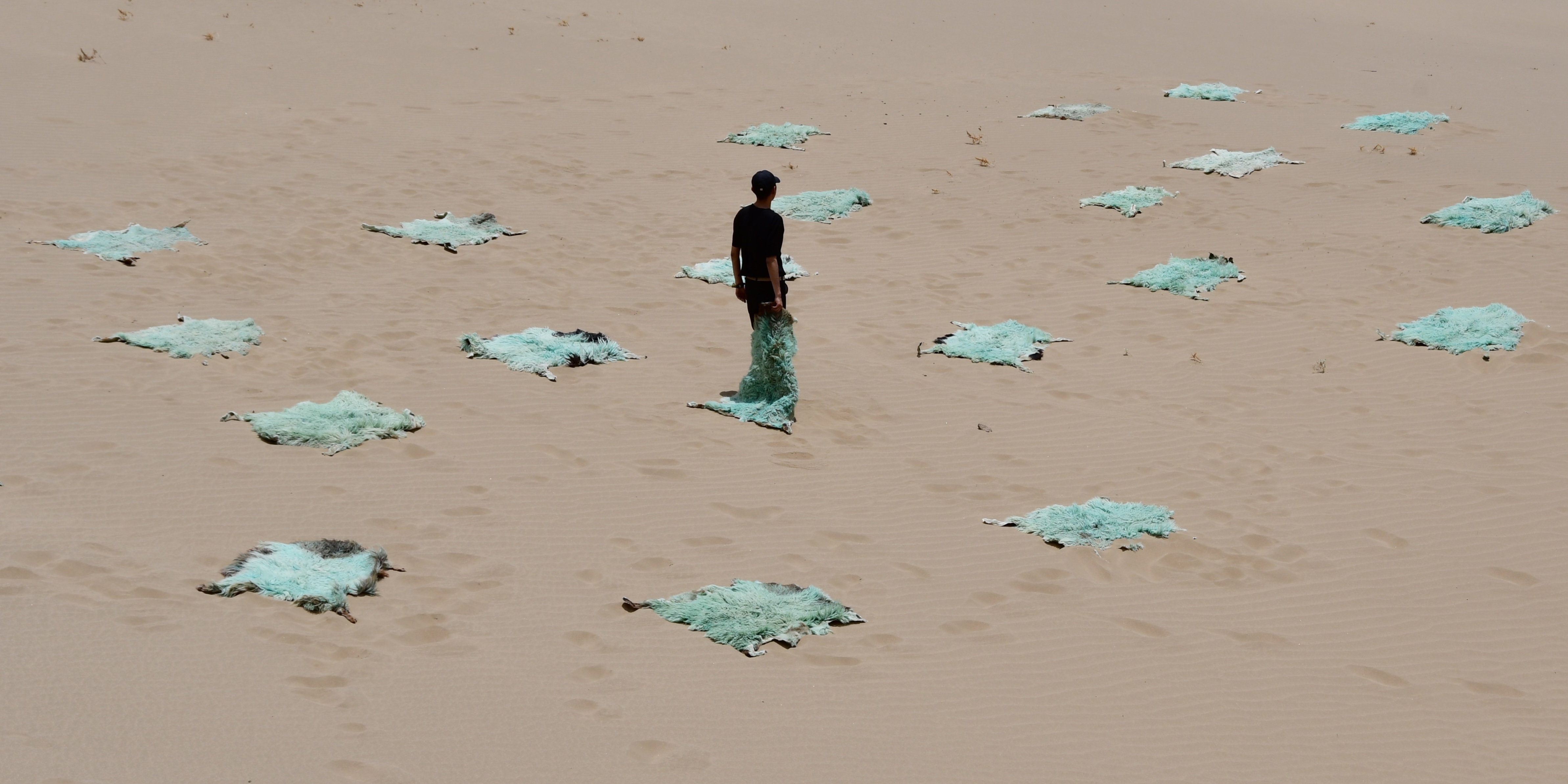
Whilst Tenzin Dhame turns to mythic narratives and inner consciousness to understand cultural identity, Karma Tsering (b. 1993) looks outward to land and ecology. Primarily using materials from the natural environment of the Qinghai-Tibet Plateau, Karma Tsering’s Land art, framed by tradition and contemporaneity, questions the relationship between humans and nature. The artist’s interlaced heap of wood taken from livestock enclosures encases a cube of yak and sheep wool in his work Balance (2024). The wool cube, decorated with yak dung, represents the earthly and the organic, whilst the wood that encloses it symbolises the human and the manufactured in a bond that has existed for generations. This abstract portrayal of herder and livestock delves into the transformation of this relationship in a contemporary age of environmental change.
Elsewhere in the exhibition, Taglha Gyal (b. 1998), Pema Lhazom (b. 1997), Sönam Paljor (b. 1990), Tsering Tashi (b. 2001) and Sonam Tsering (b. 2001) draw on their respective family histories and memories to portray the resilience and intimacy of familial bonds in nomadic Tibetan regions. Meanwhile, Chakdor Kyab (b. 1998), Renchen Lhamu (b. 1994), Sonam Tragyel (b. 2000), Tashi Shechoel (b. 2002) and Tenzin Gonpo (b. 1999) look deeper into the role of spirituality, belief and other traditional Tibetan cultural elements at play in a more urbanised Tibetan society.
A Strange Song Amongst the Snow comes one year after As The Wheel Turns, a group exhibition of the previous generation of established contemporary Tibetan artists that was also held at Rossi & Rossi. This presentation serves not only as a continuation of such past exhibitions, but also an opportunity for the gallery to extend a platform to artists whose practices speak to the core of its identity, which is rooted in Himalayan art. For most of these young artists, this is only the first time that their work has been exhibited in a gallery outside of Tibet, and it is an exciting opportunity to showcasetheir innovative practices and artistic progression.


%20-Karma%20Tsering.jpg)